Tuesday, March 27, 2012

Week of March 13-17 2012


Tuesday, March 13, 2012

On Tuesday, we reviewed “dissolved oxygen” with Sherril. We discussed how it is added to and removed from a system. We also talked about what influences and affects dissolved oxygen levels. Sherril gave a small introduction to “experimental design”. We formulated a simple hypothesis to test how dissolved oxygen differs between inside an algal canopy and directly outside of an algal canopy.

Later, we divided into groups and went out into the pond to do some field work on algal cover for Sherril’s research.

First, we set up our “Algal Cover” Kit.


Then, we went out to collect data and samples.

Using the GPS to locate our site.

Koa and I preparing to collect data and samples at one of our sites.

Koa obtaining sediment core samples.
Leila recording data.

Saturday, March 17, 2012

            On Saturday, Koa gave a brief intro to dissolved oxygen for the interns and the Ocean Awareness Training (OAT) visitors.

Koa giving a talk about Dissolved Oxygen.

Later, we collected samples of dissolved oxygen through field work to test our hypothesis and performed titration to collect dissolved oxygen data.

Samples of dissolved oxygen.

Cami performing a titration. Meghan preparing samples to be titrated.

Sherril speaking with the OAT visitors.

            All in all, it was a fun week filled with experiments and collaborating in an effort to design our own experiment. It was great and fun meeting new people (OAT) and being able to introduce them to a little science. (:

Tuesday, March 6, 2012

Crabbing!


A quick tutorial to the interns by Hi'ilei

Being the end of the month, Hi'ilei showed us another from of fishing. This month we went crabbing! To catch the crabs we used a simple method by bating simple circle nets and setting them and checking them later.


This Tuesday we were actually crabbing for certain crabs, native crabs named the Moala and Kuahonu. We learned that out in the Bay there population is decreasing because of all the competition for resources. Here in the fishpond where it is a bit more sheltered, the populations of these two species have a better chance of growing populations.
  
A stack of nets ready for the water!

Anu and Nikki setting the traps in the pond

Doing this weekly, Hi'ilei wants to try to track the population growth of these two species in the pond. Seeing if there are certain times of the year where the populations flux. The Moala is a docile crab with long vibrant purple pincher's. The Kuahonu is named after the honu because the spots on its carapace resemble the shell of a honu.


 This is a Moala flipped over and you can see his purple pincers. We can also tell it is a male by recognizing the "V" on the bottom of the crabs body. A female will have a "U" shape instead.


To the right is the Kuahonu and on the bottom part of the carapace we see the spots that the crab is named for.
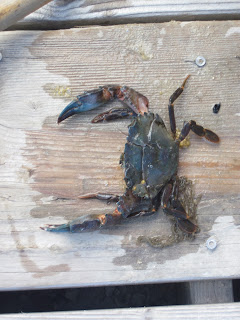
There are also crabs that are in the pond that are non-native. One of those crabs are the Samoan crabs, these were introduced here to the Islands.  They can grow to a large size and be a fierce competitor when it comes to foraging for food. This is a Samoan crab that was caught in one of the traps next to a moala.

Saturday, March 3, 2012

Aloha e nā poʻe o ka loko iʻa o Heʻeia

Poʻalua ma ka lā  ʻiwakāluakūmākahi o Pepeluali

Ma kēia lā, ua pau mākou i ka mea kānana no nā mea hōʻikeʻike ʻuʻuku haku no Megsie. i kēlā lā i makani ai. ua waʻu ka hapanui o ko mākou hui i nā limu manauea mai nā mea hōʻikeʻike ʻuʻuku mai ka pule aku nei. ʻai mākou i nā ʻai māmā me mākou a ua walaʻau pū mākou e pili ana i ko mākou mau lā a me nā meaʻai apau. ʻO ka lā hope o Megsie ma mua o kona haʻalele ʻana ma ka moku nui no ka ʻimi i ke kumu. Ua ʻimi mākou i nā mea hōʻikeʻike ʻuʻuku no nā holoholona liʻiliʻi loa. ua ʻimi kākou i nā mea e like me ka dorvillidae, copapoda, serilladae, a me ka syllidae. a laila, ma hope o ko mākou ʻimi ʻana i nā ʻohe nānā, komo mākou i nā holoholona i nā ʻohe heʻa kahi me nā holoholona e like me kēlā holoholona. 


E hana pū nei ʻO Cami a ʻO Danielle me ka mea 


ma ka ʻaoʻao hema, i nā ʻohe heʻa me nā holoholona mai nā mea hōʻikeʻike ʻuʻuku

ma ka ʻao ʻao ʻakau, e ʻakaʻaka ʻO megan i kona hana ʻana me ka ʻohe nānā me Daniel. ua ʻimi ʻO Daniel i ko Megan kākau ʻana ma ka pepa na mea likeʻole i pili i ke kumu hana.


ma ka ʻaoʻao hema, i ka ʻohe mai ke kahua hoʻokahi haneli a me ʻeono i ka mea hōʻikeʻike ʻuʻuku hoʻokahi ma hope o ka kānana ʻana me ka ʻelima haneli microns. 

ma ka ʻaoʻao ʻakau, ʻO ka hoʻokahi ʻohe no ka holoholona dorvillidae ma hope o koʻu ʻimi ʻana mai ka ʻohe nānā 


ʻO nā ʻohe heʻa kēia. 


Ma ka poʻaono i ka lā ʻiwakāluakūmālima o Pepeluali


Ma kēia lā, ʻO ka lā wahi noho like o ka poʻe kēlā no ka Paepae o Heʻeia. ʻO ka lā mua no mākou i ka lā wahi noho like o ka poʻe kēia. O ka mea mua, ua hui mākou i ka hui ma ka honua ma mua o ka loko iʻa. A laila, hoʻolauna mākou e pili ana ko mākou inoa a me e pili ana ka noho mākou i hea. ua hele mākou ma ke kaʻapuni o ka loko iʻa no ka poʻe ua hele ʻole. a laila, ua hele mākou ma ka paia i ka pani o ka loko iʻa, ua holo wāwae mākou i ka wāhi o ka paia a ua neʻe i na koʻa i ka ʻelua wahi ma hope o ka wahi o nā koʻa. ua kūkulu i ka paia no ka mea wahī. Ma hope o kēia, ua hiki mai ʻO Anakē Donnie e walaʻau me mākou e pili ana i ka moʻolelo o ka loko iʻa o Heʻeia. Hoihoi loa kēlā mea walaʻau a ua hauʻoli loa mākou e pili ana i ko Anakē Donnie hiki mai ʻana. 


ʻO ka manawa moʻolelo me Anakē Donnie. a Hoʻolohe ʻO Cami iā Anakē Donnie i kona moʻolelo hoihoi loa. 


E walaʻau ana ʻO Anakē Donnie.


ʻO ko Koa a me Megan heluhelu ʻana i ka puke moʻolelo o Kāneʻohe i nā kēia mau kiʻi.


ʻO ka kiʻi kēia o ka loko iʻa o Heʻeia ma mua o kēia mau lā i ka wā kahiko. Nani loa kēiā kiʻi. 


Thursday, February 23, 2012

Titration and Sampling.                    


Last Tuesday we worked with Sherril on determining the amount of dissolved oxygen from different areas of the pond that also contained large portions of Gorilla ogo. We collected water samples from inside the canopy of the Gorilla ogo, and outside of the canopy as well. Once all the samples were collected, we used titration to determine the amount of dissolved oxygen from the samples.
                                                       
Koa mixing in the titrant.
Anu scraping pieces of ogo.
Above are some of the samples we took that have been prepared to go through the titration process.


On Saturday Megsie started off with a whiteboard lecture, giving us a basic understanding of a food chain and how detritus organisms play a major role in food webs as well as the brown and green worlds. Megsie also went on to explain stable isotopes and the role they play in food webs.

We then went out to collect samples of Gorilla ogo from specific areas in the pond. After collecting samples, pieces of Gorilla ogo(10cm long) were taken from each site and cleaned off by scraping the top layer of the Gorilla ogo. This was to help Megsie determine what type of organisms are living of the Gorilla ogo.

Niki and Koa siving.
Once a piece of Gorilla ogo was taken from a sample, the sample then went over to the siving station. The samples were shaken fo approximately three minutes then poured into 500mm and then into 250mm to unsaturated soil out of the water.


A sting ray Cami, Lelia, and I found inside the pond by the break in the wall.


Monday, February 13, 2012

I Ka Papa Hana No'eau (he hana like)

Aloha bloggers! It's great to be back at the Fishpond and working with the LAIP crew (: I have returned!

This past Tuesday was a construction day for MegaMegs! Instead of the Megs Pex Cages that we built in the earlier LAIP sessions, we now present to you Megsie's new core thingamabobbers!

Here we have Anu & Megan and Cami & Nikki cutting the cores to the right precision!

We've been using plastic cores but decided to try a metal flashing core so that we could blaze through the Gorilla ogo.

Now to put these bad boys to the test! Koa and Wendall with the assist!


It's sieve-ing time!!! Patience is a virtue! Looks like these new cores work like a charm (:

Tune in next time here at the fishpond!

Tuesday, February 7, 2012

Gone Fishin'!

Last Tuesday, we were treated to a fishing lesson with Paepae o He'eia executive director Hi'ilei Kawelo.  This was the first of several sessions that Hi'ilei will lead to introduce local fishing practices and methods to the interns.  Her family has been fishing in Kaneohe Bay for over eight generations.  Today's lesson was pole fishing, or ka makoi.  We learned how to make the bamboo pole, tie the line and the hook, and catch the bait (shrimp, or opae).  And all of the interns proved themselves to be old salts - everyone caught a fish!  Wendell caught enough for the whole group! 
Hi'ilei demonstrates how to select a good pole.
Nikki's got herself a winner. 
           

Learning to tie a good knot.
Tying a good knot takes concentration.

Catching opae
 
Invasive crab, ala'eke (Thalameta crenulata).  We used this one for bait.


Hi'ilei shows the technique (it all in the waiting)
Waiting... 
More waiting...